 The Captain's Cabin
Flying with a big power bank: the 100Wh rule and how I pack two
Updated October 5, 2026
| Item | What it does | Status | |
|---|---|---|---|
| Anker Prime Power Bank, 27,650mAh 3-Port 250W | The big bank, keeps a laptop and phone going all day | Own it | View on AmazonChecked 2026-09-29 |
| Anker Laptop Power Bank, 25,000mAh Triple 100W USB-C | The second bank, lives in the laptop bag | Own it | View on AmazonChecked 2026-09-29 |
| Anker Power Bank, 10,000mAh Portable Charger | Pocket size for a phone-only trip | Shortlist | View on AmazonChecked 2026-09-29 |
| UGREEN Nexode 200W 8-Port Charging Station | One brick on the hotel desk to refill everything overnight | Shortlist | View on AmazonChecked 2026-09-29 |
Is this power bank allowed on the plane? I carry two large ones, and the answer for both comes down to one number printed on the back, not the big mAh figure on the box. This page is the rule, where it comes from, and how I pack.
The rule, from the people who write it
The Federal Aviation Administration sets the limit. Its PackSafe page says lithium ion batteries "are limited to a rating of 100 watt hours (Wh) per battery," and that spare batteries, "including power banks and cell phone battery charging cases, must be carried in carry-on baggage only." The Transportation Security Administration's page for power banks says carry-on bags yes, checked bags no, and that spare lithium batteries are prohibited in checked luggage. Between 101 and 160 Wh the FAA allows up to two spares with airline approval. I would ask the airline before the trip. I read both pages on October 5, 2026; the FAA page was last updated August 11, 2026 and the TSA page May 14, 2025. Rules change, so check them before a trip.
Why mAh is the wrong number to look at
Power banks are sold by milliamp hours because the number is big. Airlines measure watt hours. The FAA's own tip is to multiply the battery voltage by the amp hours, and newer banks print the Wh rating on the case. A 27,650mAh bank is 27.65 amp hours. At the 3.6 to 3.7 volt cell rating most banks use, that lands right at the 100Wh line, which is exactly why I read the label instead of doing the math in a security line. The TSA page says the final decision rests with the TSA officer. If your bank has no Wh printed on it, that is a reason to carry a smaller one.
What I actually carry
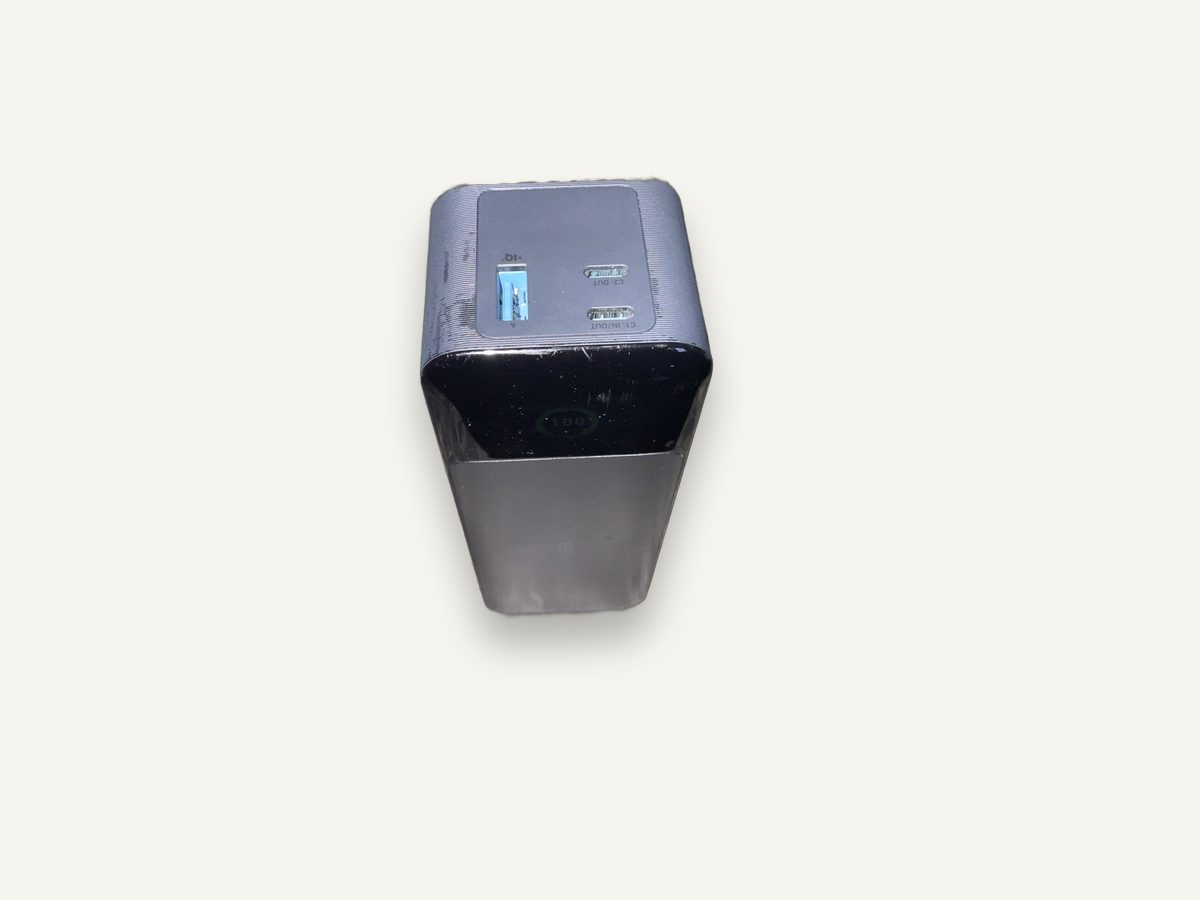
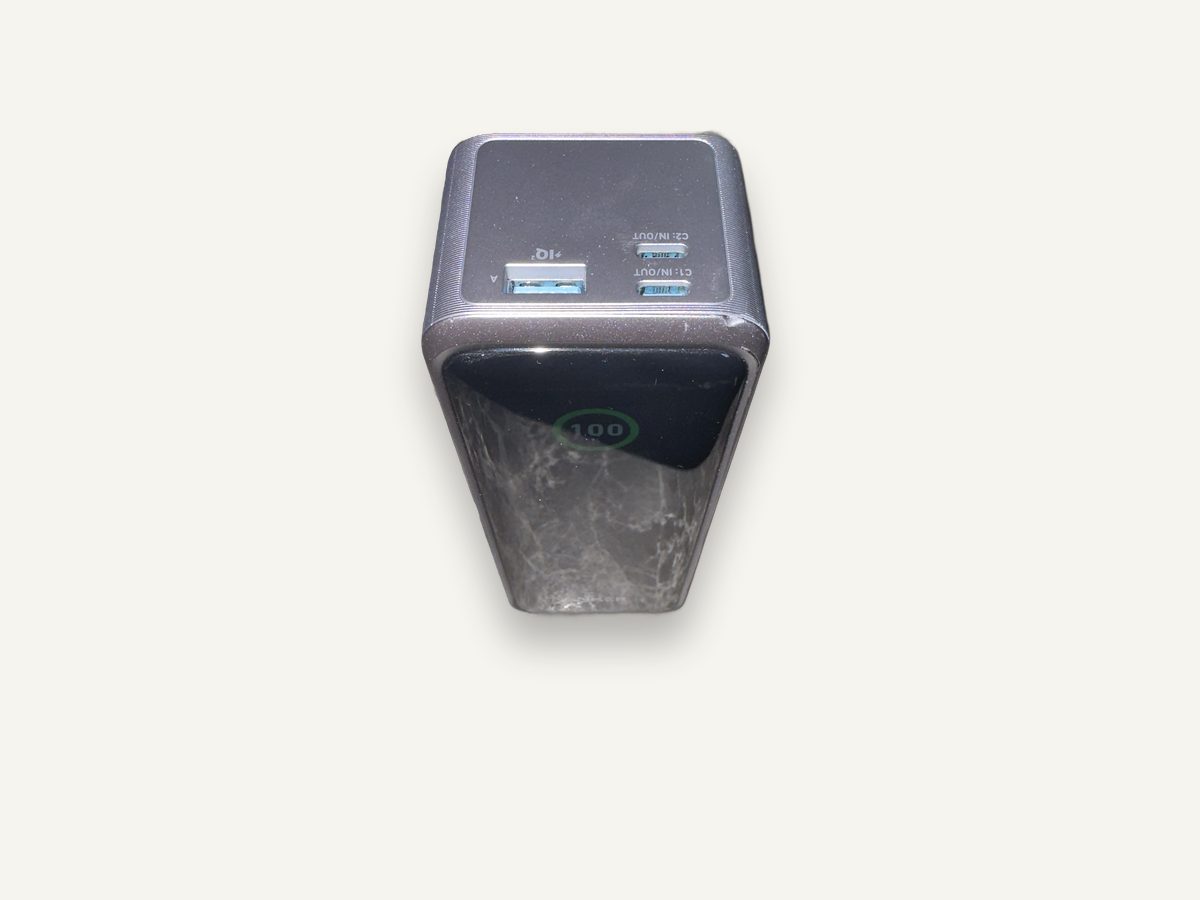
The Anker Prime is my big bank. I bought it for travel and it keeps a laptop and a phone both charged through a long day out. The readout on the front shows the charge left as a number. The 25,000mAh laptop bank came a little later as a second pack that lives in the laptop bag, so I am never choosing between the two devices. Both ride in my carry-on, never in a checked bag, and I check the label on each before a trip.
How I pack two banks
- Both banks go in the carry-on, in the pocket I can reach without unpacking. If a gate agent checks the bag at the last minute, the FAA says the banks come out and stay with you.
- Cables go in a small pouch with the banks, so I am not digging through the bag for one on the plane.
- Terminals stay covered. The FAA asks for battery terminals to be protected from a short, and a pouch does that.
- I charge both the night before. A hotel room with one outlet is where a multi-port desk charger earns its place. The desk charger I bought is no longer sold; the UGREEN on my shortlist is the current equivalent, and I have not used it.
- If I am only carrying a phone, I would take the pocket-size bank on the shortlist and leave the big ones at home. Less weight, same rule.
Three things this page does not cover
Airlines can add their own rules on using a bank in the seat, and some do. I have not read every airline's page, so check yours. I have also not measured how many full phone or laptop charges each bank gives on a real trip; when I do, the numbers go here. And nothing above applies outside the United States without checking that country's rules first.
Both banks are on the tech and gaming page with the rest of what I carry.
The picks
More